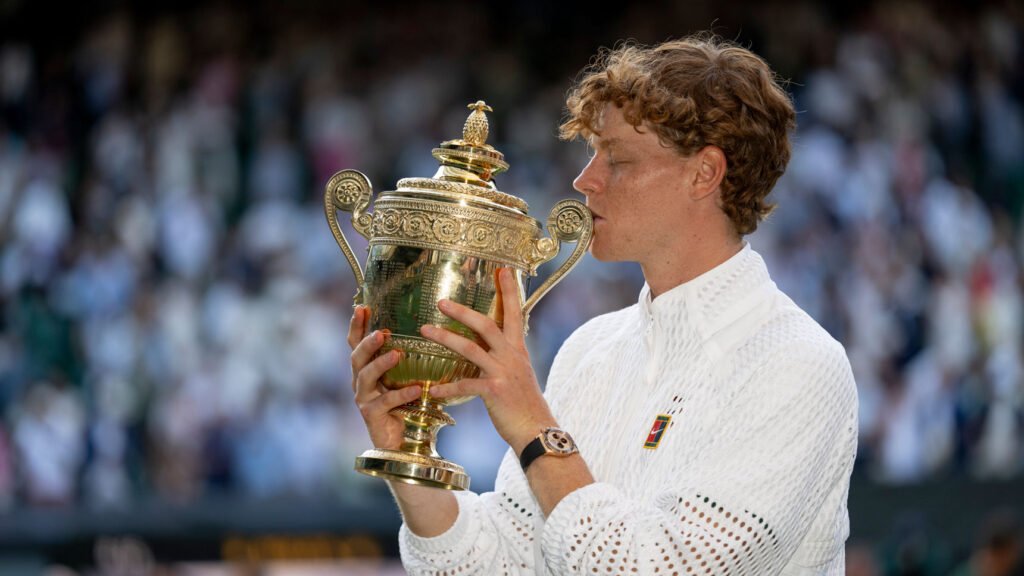
Jannik Sinner did not just defend his Wimbledon title by beating Alexander Zverev 6-7, 7-6, 6-3, 6-4. He did it in a final that said a lot about where men’s tennis is now: less noisy than the era of the Big Three, but no less demanding, and increasingly shaped by the players who can stay calm, stay upright, and stay efficient when the weather gets heavy and the margins shrink.
The match was not a spectacular burst of tennis so much as a slow tightening of Sinner’s grip. Zverev had the tools to make it awkward, especially early on, but once Sinner settled into the rhythm of the final, the balance shifted in a way that felt almost physical. The Italian was not simply hitting better shots. He was making the court feel smaller for Zverev, narrowing the options, shortening the freedom, and turning a close final into a match that gradually belonged to him.
A final shaped by pressure
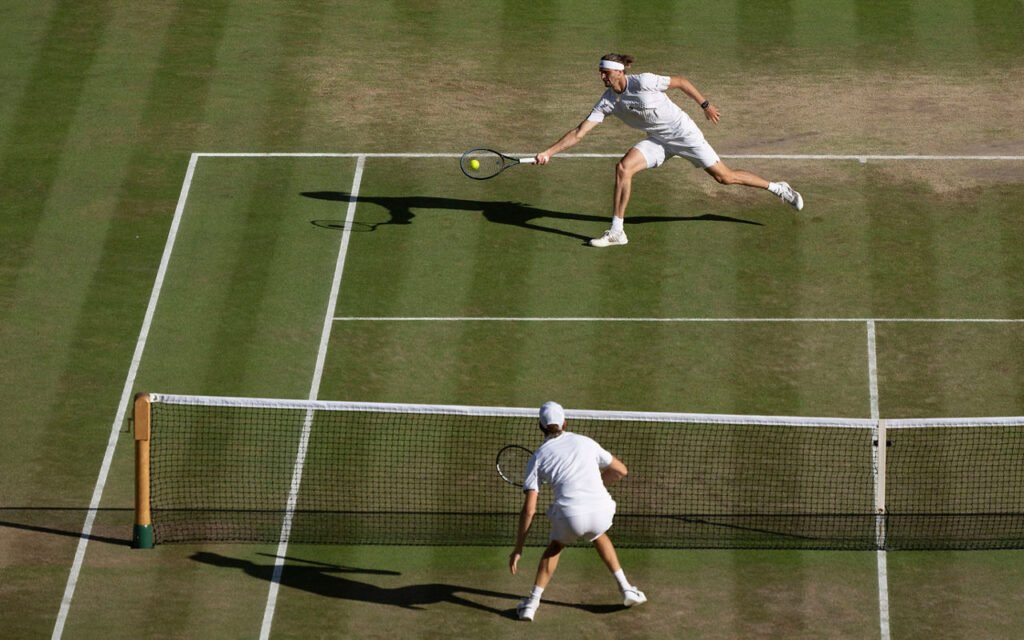
AELTC/Florian Eisele
The opening set gave Zverev hope. He took it in a tiebreak, which mattered because it showed he could still use his serve and frame to keep Sinner from taking over immediately. On grass, especially under the kind of heat Wimbledon has been dealing with, that is not a small thing. A player like Zverev can make a match feel manageable just by serving well enough to prevent the other man from getting comfortable.
But the second set was the turning point. Sinner won the tiebreak, and from there the tone changed. In a final like this, the scoreline matters, but the emotional shift matters more. Zverev had been close to the front door of the title; after that set he was suddenly the one chasing. Sinner’s composure in that moment was the clearest reminder that big finals are often decided not by one perfect shot, but by who can sit inside pressure without looking rushed by it.
What Sinner did better
AELTC/Jonathan Nackstrand
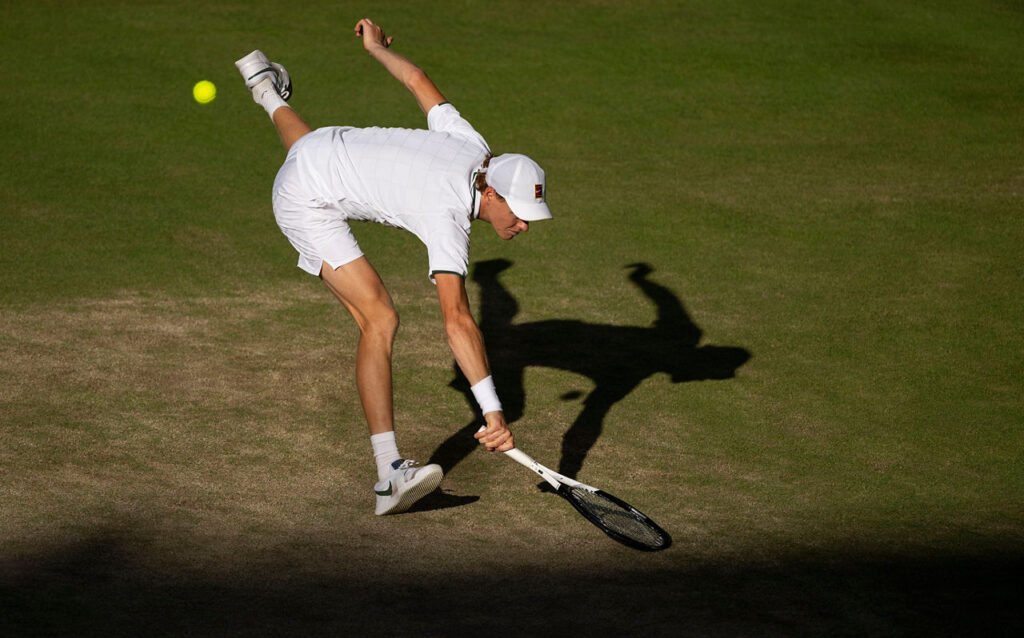
Sinner’s tennis is not built to impress in the loudest way, and that is part of why it works so well. He does not chase the point with unnecessary movement, he does not overhit when control is enough, and he keeps asking the same tough questions until the other player starts to answer them badly. Against Zverev, that meant deep returns, steady pressure from the baseline, and a refusal to let the match become a serving exhibition on Zverev’s terms.
That style can look almost plain if you only watch for flash. But in a final, plain is often another word for reliable. Sinner’s advantage was that he could keep doing the same difficult things without draining himself, which becomes decisive when a match is played in heat and every extra rally starts to cost more than the last.
Zverev’s height mattered
AELTC/Ian Walton
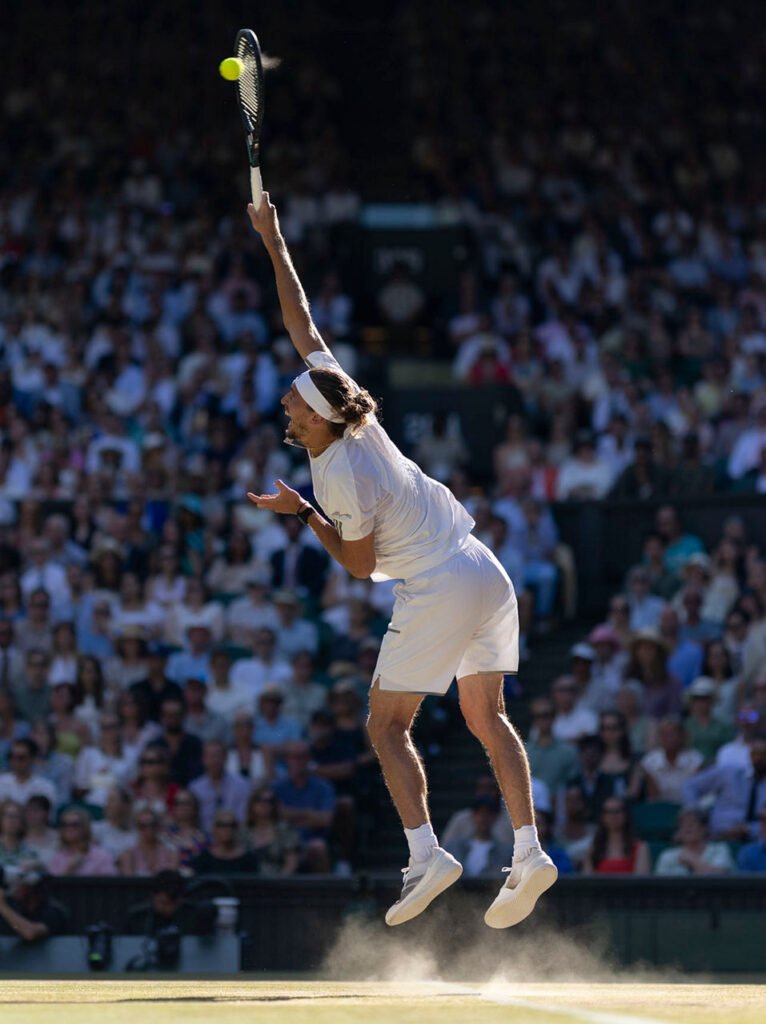
Zverev’s height gave him a real route into the final. At 6ft 6in, he can serve from a point that naturally creates better angles, and on grass that usually means cheap points, easier holds, and the ability to avoid long, tiring exchanges. Against a returner as sharp as Sinner, that advantage is not trivial. It is one of the few ways a player can keep the match on a knife edge without needing to dominate rallies.
But height is a tool, not a guarantee. Zverev needed his serve to do a lot of work, and when Sinner started reading it more clearly, that built-in advantage became less powerful. Once the match moved past the first two sets, Zverev’s size helped him survive, but it did not help him change the direction of the final. Sinner was simply better at turning returns into pressure and pressure into control.
The heat changed everything
This Wimbledon was played in conditions that made energy management part of the sport itself. Heat does not just tire players out; it changes their choices. It makes long rallies costlier, concentration harder to sustain, and recovery between points more important than usual. That is why the final felt like a contest of who could keep their tennis clean for longer rather than who could produce the single most dazzling burst.
Sinner looked built for that sort of day. His movement was efficient, his decision-making was compact, and his game did not ask him to spend unnecessary energy. Zverev, by contrast, had to lean more heavily on serve and court presence to save energy, which is a good strategy until the other player keeps the ball coming back with the same depth and the same authority. In that sense, the heat quietly magnified Sinner’s strengths and made Zverev’s task even more demanding.
Alcaraz’s absence changed the mood
Carlos Alcaraz’s absence mattered too, even though he was nowhere near Centre Court on final day. Wimbledon without Alcaraz loses a certain electricity. He is the player most likely to turn a match into an athletic and emotional event, the one whose tennis can feel like a surprise even when he is expected to win. Without him, the tournament became more orderly, more legible, and more heavily weighted toward the player who could impose structure rather than chaos.
That does not diminish Sinner’s title. If anything, it sharpens it. He did not just win a more open draw; he also showed he could handle the responsibility that comes with being the man everyone expects to beat. Alcaraz’s absence stripped away the rivalry that has defined the sport’s top tier, but it also left Sinner with the job of proving he could carry the tournament’s most important match without the drama Alcaraz usually brings.
Why the final felt so decisive
AELTC/Joel Marklund
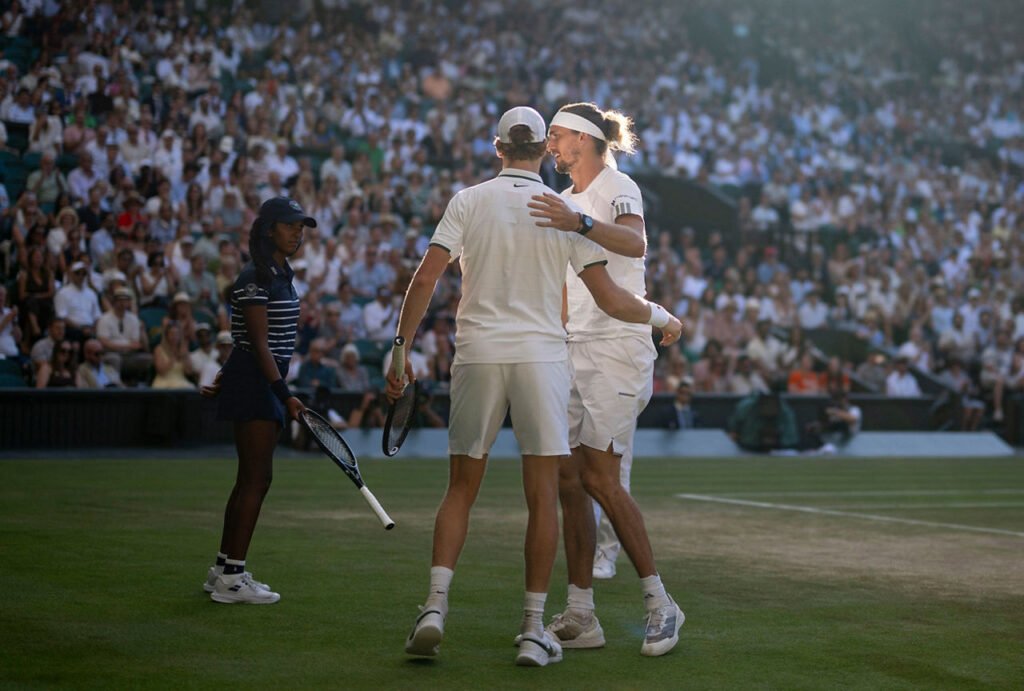
The tenth win over Zverev is not just a number. It is a pattern. Sinner now knows how this matchup behaves, and Zverev increasingly has to try to break a rhythm that Sinner already understands. That does not mean every meeting is easy, but it does mean the balance of power is no longer really in doubt. Zverev can make Sinner work for a set, sometimes even for two, but Sinner is now the player more likely to control the deeper shape of the match.
That is why this final matters beyond the trophy ceremony. It showed that Sinner is becoming the reference point in the men’s game: the player whose calm, consistency, and shot quality can outlast even a very dangerous opponent with the physical tools to trouble him. Wimbledon 2026 did not just end with a champion. It ended with a clearer picture of who that champion is becoming.
What Wimbledon leaves behind
AELTC/Kieran Cleeves
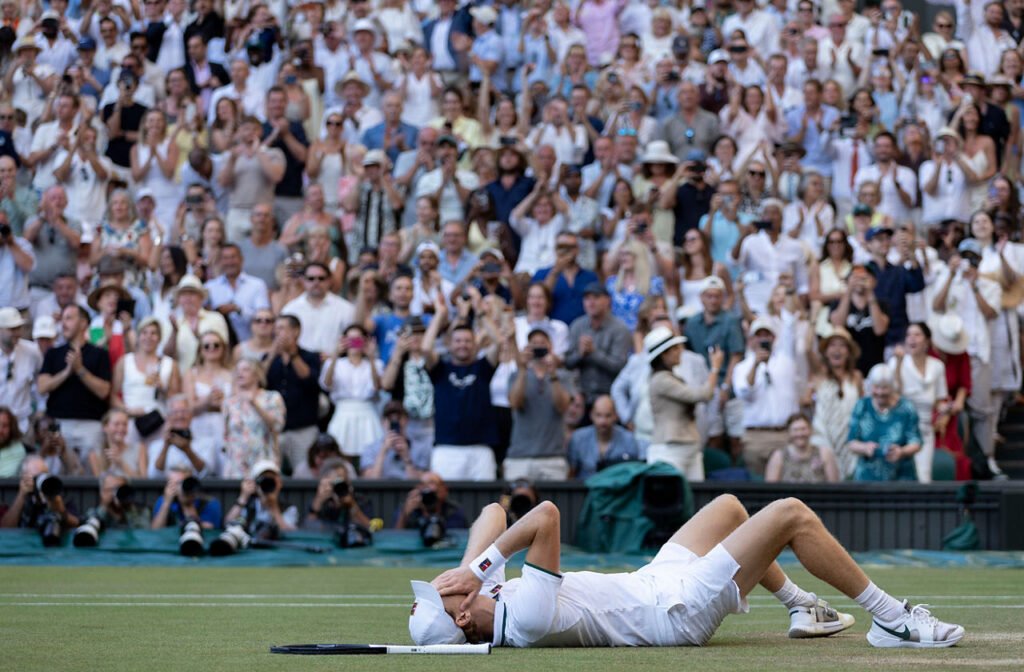
What makes this title feel important is that it was won in conditions that rewarded more than talent. It rewarded judgment, fitness, patience, and the ability to manage a match without forcing it. Sinner did all of that better than anyone else in the final, and that is why the scoreline, while close, never quite captured how much control he ultimately had.
Wimbledon 2026 will be remembered for the heat, for Alcaraz’s absence, and for a final that looked tight before it looked inevitable. Sinner’s defence of his title was not the most explosive win of his career, but it may have been one of the clearest. On a day when height, health, and composure all mattered, he stood tallest.